

Book now

TMD & jaw therapy

Treatment of temporomandibular disorders (TMD) — for jaw pain, grinding, clicking and tension in the jaw and neck area.

Who is it for?

TMD and jaw treatment at Therakura

Treatment approach

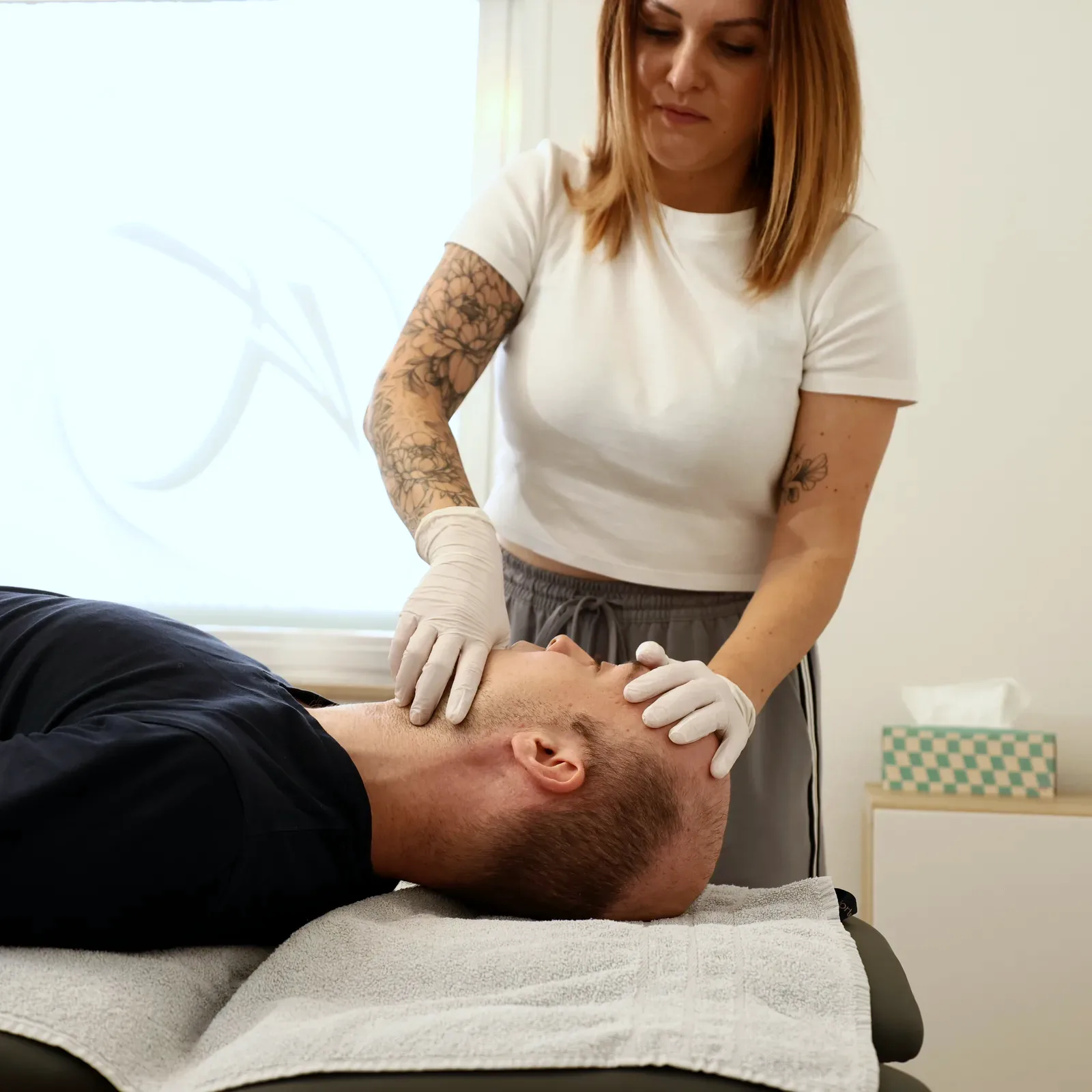
We start by examining the mobility and movement of your jaw, the chewing muscles and the jaw joint. We also take into account possible connections with the cervical spine, head posture, breathing and your everyday habits and demands.

Depending on the findings, treatment includes manual treatment of the jaw joint, treatment of tense chewing, facial and neck muscles, external techniques and — where clinically indicated — intraoral techniques, as well as mobilisation of the cervical spine. This is complemented by exercises for controlled jaw movement that is as pain-free as possible, strategies to reduce unconscious clenching, a home exercise programme and advice on load management and self-management.

TMD can have both muscular and joint-related causes. Painless jaw clicking on its own is common and does not automatically need treatment — what matters is whether there is additional pain, restricted movement or functional problems. Physiotherapy is a conservative component of TMD treatment: manual therapy and individually guided exercises can help to reduce pain and improve jaw function.

Working with dentists

Interdisciplinary collaboration with dentists, orthodontists, oral and maxillofacial surgeons and treating doctors is expressly welcome. Dental treatment — such as fitting an occlusal splint or investigating structural changes — continues to be carried out by appropriately qualified professionals. You are welcome to bring existing findings, X-rays or information about a splint you have already been fitted with to your first session. For unclear, new or unusual symptoms, we recommend a medical or dental assessment first, or alongside treatment.

Duration & fees

TMD treatment is provided as part of regular physiotherapy: sessions last around 30 minutes and the standard rates apply. Depending on the findings, active exercises and measures to do at home are added.

Reimbursement: Reimbursable by the CNS as part of regular physiotherapy (a valid, validated prescription is required — we handle the submission for you). All details & insurer links →

Available at these locations

Your contacts

Frequently asked questions

What does TMD mean?

TMD stands for temporomandibular disorder (in German-speaking countries often called CMD, craniomandibular dysfunction). The term describes symptoms and functional disorders of the jaw joint, the chewing muscles and the related structures.

Does every jaw click need treatment?

No. Clicking without pain, restriction or other symptoms is common and does not necessarily need treatment. However, if you have pain, locking or restricted mouth opening, it should be assessed.

Can physiotherapy help with teeth grinding?

Physiotherapy can treat the associated muscle tension, pain and movement restrictions. Possible dental causes and whether you need an occlusal splint should also be discussed with a dentist.

Do you also treat inside the mouth?

Where clinically indicated, certain muscles and structures can be treated gently inside the mouth. This is only ever done after a prior explanation and with your consent.

Do you also treat headaches and neck tension related to the jaw?

Yes. During the examination, we look not only at the jaw but also at possible interactions with the cervical spine and the head and neck muscles.

Should I bring my occlusal splint?

Yes. Please bring any splints you have, along with relevant dental or medical findings, to your first appointment.

Do I need a prescription?

For the costs to be covered by the CNS, you need a valid medical prescription that has been validated by the CNS. Treatment as a self-paying patient is also possible without CNS reimbursement.

When should I see a dentist or doctor first?

If you have acute toothache, significant swelling, fever, have had an accident, suddenly cannot open your mouth at all or have new severe symptoms, you should first be assessed by a doctor or dentist.

Your path to lasting health starts here.

Book your appointment online – in Schuttrange, Echternach or Contern.

Book an appointment